
Electronic Waste in Bangladesh
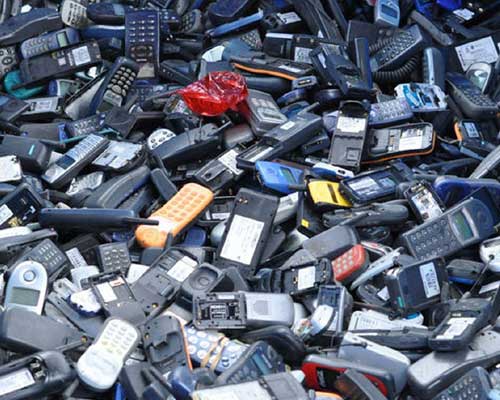
The vision 2021 of becoming "Digital Bangladesh" aims to make our nation stronger through effective use of modern technology on important sectors and areas like education, health, communication and alleviation of poverty levels. This clearly predicates the wider usage of electrical and electronic products throughout the country. Domestic policies aside, a worldwide surge in the use of electronic goods can be expected from a recent World Trade Organization (WTO) initiative to remove import tariffs from 201 information technology products in a $1.3 trillion deal. It is certain that all these millions of electronic devices – cell phones, tablets, laptops etc. will one day reach their end and will directly enter the waste stream of the country.
Current scenario in Bangladesh
From NBR data, it is evident that in the last 3 years, 63,003,818 mobile phones have entered Bangladesh. The lifespan of a mobile phone currently stands at a maximum of 2.5 years or even less in some cases. This indicates that these used mobile phones and also unaccounted informal imports will be in the waste stream of Bangladesh within the next two to three years. Furthermore, as our nation is hoping to become digitalised in the near future, the usage of electronic equipment will rise at a faster pace. Currently in Bangladesh, recycling of disposed electronic products is mainly being handled by the informal sector. Electronic waste or E-waste is collected, segregated, dismantled and recycled in the informal sector based in Dhaka's urban slums.
The first stage of the value chain includes the generators of electrical waste, which are the households and offices. The next players of the trade value chain are the informal scrap collectors or vangariwala, who buys e-waste directly from the generators. Here the vangariwala either sells it to the second hand market, repairs and sells it again to consumers or secondhand shops, or sells them to the bulk collectors and manual dismantlers. Once they are dismantled, the different components are sent to different places around Dhaka for further processing, recycling and smelting activities. The final step of the value chain is recycling, where precious and special metals are extracted from the component. The manual dismantling and recycling stages include processes like open burning and acid treatment. E-waste contains around 1000 different chemicals, many of which contain high levels of toxins and hazardous elements. If e-waste is not recycled and disposed of in an environmentally prudent manner, it can pose serious threats to both human health and the environment.
International regulations
The international community started regulating the issue of hazardous waste with the creation of the United Nations (UN) treaty known as the Basel Convention on the Control of Transboundary Movements of Hazardous Wastes and their Disposal. The Basel Convention came into force in 1992. It was designed to reduce the movement of hazardous waste between nations, and specifically, to prevent transfer of hazardous waste from developed to less developed countries. To date, 183 countries have ratified the convention. Bangladesh is a signatory and has also accessed to the Basel convention in April 1, 1993. The import of used electronic goods is prohibited in Bangladesh as per the country's Import Policy Order (IPO). But as large quantities of e-waste already exist in the informal sector, it is unclear to what extent the ban is enforced and whether the e-waste is domestically produced or illegally imported here.
E-waste is one of the fastest growing waste streams in European countries, and as such, two pieces of legislation have been put in place to address the problem. The directive on waste of electrical and electronic equipment (WEEE directive) and the directive on the restriction of the use of certain hazardous substances in electrical and electronic equipment (RoHS Directive) became EU law in February 2003. The WEEE directive is aimed at reducing the amount of waste of electrical and electronic equipment that are destined for landfills, whereas the RoHS directive is aimed at eradicating certain hazardous substances from new electrical and electronic equipment in the first instance.
Under the WEEE Directive, producers are expected to meet the cost of collection and processing of their e-waste in accordance to the Extended Producer Responsibility (EPR) model. Although the producers have primary responsibility, sharing responsibilities across the product chain among the different stakeholders – national and local government, manufacturers, distributors, vendors and consumers – is an inherent part of EPR.
Country examples
In Asia, the countries leading in policy implementation are Japan, South Korea and Taiwan, where e-waste management has been undertaken since around 2000. Japan has established two pieces of legislation to address e-waste that follows a variation of the EPR model, requiring consumers, retailers and manufacturers to share the burden and pay for recycling costs. Consumers must pay a recycling fee when they drop off their used appliances at either a retail outlet or collection centre.
The USA has not enacted a national legislation, but there are laws at the state level. California's legislation enables the collection of an Advanced Recycling Fee (ARF) for retail purchases of electronic goods. These fees are used to fund the state's e-waste management system.
In India, The Ministry of Environment and Forest, as part of the Environmental Protection Act of India, has enacted the E-waste (Management and Handling) Rule of 2011 that took effect on May 1, 2012. The rules largely follow the EPR model introduced by the EU's WEEE Directive.
Recommendation
A digitised Bangladesh is unquestionably a huge opportunity for our nation. But we should be prepared for the consequences that will accompany this modernisation leap. In order to tackle the huge quantities of e-waste that will accumulate in the future, it is advisable to enact e-waste regulations at the national level, create awareness of the issue among all stakeholders and adopt a self-sustaining e-waste management model for the country.
Source: The Daily Star Published on August 05, 2015.
Add as a preferred source on GoogleRelated Mobile News & Blog
 Tecno has officially launched the Spark 50 Pro smartphone in Bangladesh. Tecno Spark 50 Pro is powered by the MediaTek Helio G100 Ultimate processor and features a 6.78-inches display with a 120Hz refresh rate. The device comes with a 6000 mAh battery supported by 60W Super Charging. The smartphone features a 50MP Sony LYTIA 600 FlashSnap main camera designed to capture detailed....English
  Helio has unveiled its latest smartphone, the Helio 46, in Bangladesh. The company positions it as a feature-rich device with a 120Hz display, a 50-megapixel rear camera, a 6,000mAh battery, and Android 16. According to the company, the Helio 46 targets consumers who prioritise performance, an advanced display, extended battery life, and a premium aesthetic at an accessible price.
Mohammad Abu Sayem,....English
Helio has unveiled its latest smartphone, the Helio 46, in Bangladesh. The company positions it as a feature-rich device with a 120Hz display, a 50-megapixel rear camera, a 6,000mAh battery, and Android 16. According to the company, the Helio 46 targets consumers who prioritise performance, an advanced display, extended battery life, and a premium aesthetic at an accessible price.
Mohammad Abu Sayem,....English  Infinix has recently launched the HOT 70 smartphone in Bangladesh. According to a press release, the Infinix HOT 70 is powered by the MediaTek Helio G100 Ultimate chipset, and features a 120Hz refresh rate display which supports up to 90 FPS gameplay. The device is backed by a 6000 mAh battery with 45W fast charging, along with bypass charging.
The Infinix HOT....English
Infinix has recently launched the HOT 70 smartphone in Bangladesh. According to a press release, the Infinix HOT 70 is powered by the MediaTek Helio G100 Ultimate chipset, and features a 120Hz refresh rate display which supports up to 90 FPS gameplay. The device is backed by a 6000 mAh battery with 45W fast charging, along with bypass charging.
The Infinix HOT....English  The increase in popularity of both iPhones and Androids mean that our mobile devices are now used for more than just phone calls and text messages. The app market is now more expansive than ever before meaning that we can shop, bank, and complete many other tasks no matter where we are in the world.
Now a day’s technology rapidly advancing every....English
The increase in popularity of both iPhones and Androids mean that our mobile devices are now used for more than just phone calls and text messages. The app market is now more expansive than ever before meaning that we can shop, bank, and complete many other tasks no matter where we are in the world.
Now a day’s technology rapidly advancing every....English  Android allows you to encrypt all the data on your de vice. You'll need a password or PIN each time the device is turned on to decode all the data. It may seem tiresome but if the phone gets into the wrong hands, there's no way to access the data without a password or PIN. It can be activated through the Android....English
  Smartphone is now like a pocket computer. Smartphones are not used just to make calls or sending SMS but also to send e-mails, making video conferences, contact via social networking sites, photos, videos, etc. Smartphone sales and demand both has increased at the present time. So before buying a smartphone, a buyer must keep in mind the following points.
* Don't just....English
Smartphone is now like a pocket computer. Smartphones are not used just to make calls or sending SMS but also to send e-mails, making video conferences, contact via social networking sites, photos, videos, etc. Smartphone sales and demand both has increased at the present time. So before buying a smartphone, a buyer must keep in mind the following points.
* Don't just....English  Vivo India announced March 25, 2026 the launch of the vivo Y21 5G and vivo Y11 5G, further strengthening its Y series portfolio with smartphones that promise endurance, offering long-lasting power throughout the day and reliable durability. Designed for consumers who rely on their devices throughout the day, both smartphones deliver dependable all-day performance, complemented by a sleek design and smooth user....English
  Hello readers, today we want to tell you five unused feature of smart phone. Now a days, information technology is growing very fast and almost everyone has smartphones. But we know that most of the user of smartphone who use of smartphones for just sending and receiving call, listening to music, resting in the Internet world and resting in self-evacuation. So most....English
  At presently there are 13 million mobile connections in Bangladesh. The handset market is about 0.8 million taka. For this reason Bangladesh government is giving the opportunity to establish a factory to give lower price handset to the customer. Bangladesh Telecommunication Regulatory Agency (BTRC) is preparing a draft guidelines to issue an agreement on this. The observation of the concerned people is....English
  When 4G launched, in the first year there were four operators and three device manufacturers as we moved from 3G to 4G. Talking on stage at Mobile World Congress 2019, Cristiano Amon, president of Qualcomm declared that "5G is here".
Comparing the first year of 4G to the launch of 5G, Amon announced that there are more than 20 networks working on....English
When 4G launched, in the first year there were four operators and three device manufacturers as we moved from 3G to 4G. Talking on stage at Mobile World Congress 2019, Cristiano Amon, president of Qualcomm declared that "5G is here".
Comparing the first year of 4G to the launch of 5G, Amon announced that there are more than 20 networks working on....English We do not guarantee that the information on our page is 100% accurate [Disclaimer].
Frequently used country codes in phone models: GL=Global, CN=China, IN=India, US=USA, JP=Japan, EU=Europe (Euro), SG=Singapore, HK=Hong Kong.